Sept. 25th, 2026

American Safe Home
Stairlifts for more than just the elderly

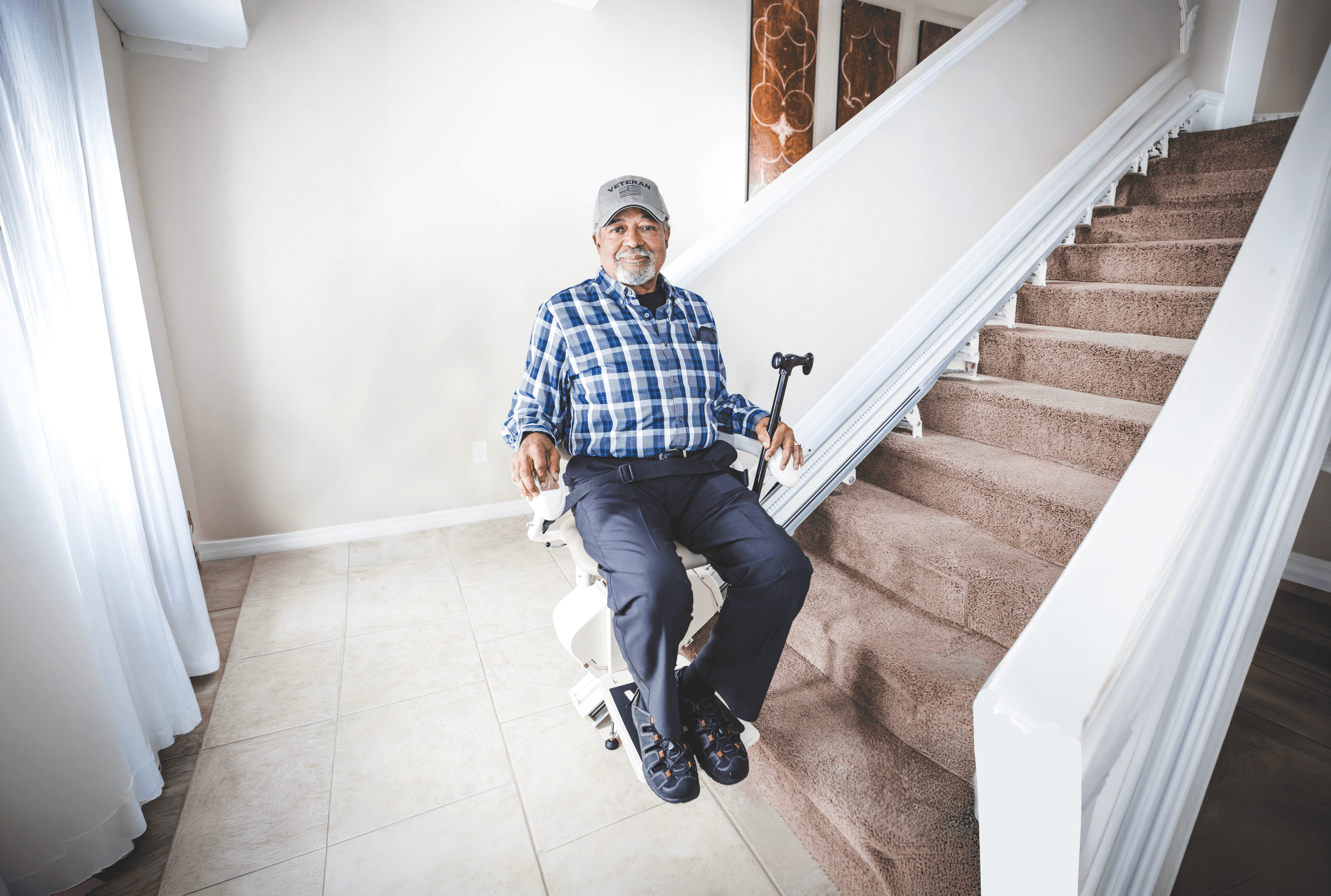
When most people hear the word stairlift, they may picture an older adult aging in place. While stairlifts can certainly be an important part of making a home more accessible as we age, they aren't exclusively for seniors.
A stairlift is an accessibility and mobility solution. Anyone whose mobility makes navigating stairs difficult may benefit from having a safer, more accessible way to move between floors.
Mobility can change for many reasons—and sometimes those changes have nothing to do with age.
Mobility Challenges Can Happen at Any Age
An injury, surgery, disability, neurological condition, or temporary loss of mobility can make a familiar staircase unexpectedly difficult.
For someone recovering from a knee or hip procedure, for example, repeatedly climbing stairs may be uncomfortable or impractical during recovery. Someone living with a long-term physical disability may encounter accessibility barriers in their home every day.
Research supports the broader role of home modifications for people with mobility limitations. A systematic review published in the American Journal of Occupational Therapy found evidence that home modification interventions can improve function for people with a variety of health conditions, while also supporting participation in everyday life.
Another systematic review examining accessible home environments found that appropriate accessibility modifications can have positive health and social effects for people with functional limitations.
In other words, accessibility isn't an age-specific issue.
1. Recovery After an Injury or Surgery
A staircase that was easy to navigate before an injury can become a major obstacle during recovery.
A person recovering from orthopedic surgery or another significant injury may temporarily have reduced strength, balance, endurance, or weight-bearing ability. Depending on the individual's circumstances and recommendations from their healthcare team, reducing the need to repeatedly navigate stairs may make everyday life at home more manageable.
A stairlift can provide an alternative way to move between floors while someone works toward regaining their previous level of mobility.
The goal isn't necessarily permanent use. A home modification can also be a temporary tool that helps someone maintain access to their home while they recover.
2. Living With a Disability
For people living with long-term physical disabilities, stairs can represent a persistent barrier to accessing parts of the home.
Research on adults with long-term physical disabilities has identified home modifications and assistive technology as interventions that can support mobility and participation, although the appropriate solution depends on the individual and their circumstances.
A stairlift can help make a multi-level home more accessible without requiring the homeowner to relocate or completely remodel the property.
For someone who has lived in the same home for years, that can mean continuing to access a bedroom, bathroom, office, or other important spaces that would otherwise become difficult to reach.
3. Chronic Conditions Can Affect Mobility
Mobility doesn't always change suddenly.
Some health conditions can gradually affect strength, balance, endurance, or coordination. Over time, stairs may become increasingly difficult even when the person is still capable of doing many other activities independently.
A stairlift can be one option for adapting the home to those changing needs.
Importantly, accessibility modifications should be considered on an individual basis. A solution that works well for one person may not be appropriate for another, which is why discussing mobility needs with qualified healthcare or rehabilitation professionals can be valuable.
4. Stairlifts Can Support Independence
One of the biggest misconceptions about stairlifts is that using one means someone has "given up" their independence.
The opposite can be true.
If stairs have become a barrier, a mobility solution can make it possible for someone to continue accessing areas of their home without relying on another person every time they need to move between floors.
For people with disabilities and mobility limitations, maintaining independence within the home can be an important part of quality of life. Research on home accessibility has connected appropriate environmental modifications with improved participation and independence.
A stairlift isn't about doing less. It's about making it possible to keep doing more of what matters.
5. Your Home Doesn't Have to Change Just Because Your Mobility Does
When mobility changes, many people immediately begin thinking about whether they need to move to a one-story home, find an accessible apartment, or make major renovations.
Sometimes those changes are appropriate. But they aren't the only options.
Home modifications can allow people to adapt their existing environment instead.
A 2025 systematic review of home modifications for aging in place found evidence of benefits including functional independence and fall prevention, while also emphasizing the importance of individualized, long-term approaches to home modification.
Although this research focuses primarily on older adults, the broader principle applies to accessibility: the home can be adapted to better accommodate the person living in it.
A Stairlift Isn't About Age. It's About Access.
You don't have to be a senior to benefit from a stairlift.
You might be recovering from an injury. You might be living with a disability. You might be experiencing changes in strength or mobility. Or you may simply have a staircase that has become difficult to navigate for reasons that have nothing to do with your age.
What matters is whether the stairs are creating a barrier to safely and comfortably using your home.
At American Safe Home, we believe mobility solutions should be about helping people live more independently in the homes they love—regardless of age.
If stairs are becoming difficult, a stairlift may be one option worth exploring.
Your home should work for you—not the other way around.
References
Cha, S.-M. (2025). A systematic review of home modifications for aging in place in older adults. Healthcare, 13(7), 752. https://doi.org/10.3390/healthcare13070752
Cho, H. Y., MacLachlan, M., Clarke, M., & Mannan, H. (2016). Accessible home environments for people with functional limitations: A systematic review. International Journal of Environmental Research and Public Health, 13(8), 826. https://doi.org/10.3390/ijerph13080826
Kehrer, A. L., Barkocy, B., Downs, B., Rice, S., Chen, S.-W., & Stark, S. (2021). Interventions to promote independent participation among community-dwelling middle-aged adults with long-term physical disabilities: A systematic review. Disability and Rehabilitation, 44(26), 7865–7878. https://doi.org/10.1080/09638288.2021.1998668
Sheth, S., & Cogle, C. R. (2023). Home modifications for older adults: A systematic review. Journal of Applied Gerontology, 42(5), 1151–1164. https://doi.org/10.1177/07334648231151669
Stark, S., Keglovits, M., Arbesman, M., & Lieberman, D. (2017). Effect of home modification interventions on the participation of community-dwelling adults with health conditions: A systematic review. American Journal of Occupational Therapy, 71(2), 7102290010p1–7102290010p11. https://doi.org/10.5014/ajot.2017.018887