September 22nd, 2026
American Safe Home
Senior Mobility Specialists

5 Reasons It Might Be Time to Invest in a Stairlift
For many people, the stairs are simply part of the home. But as mobility changes with age, injury, or disability, something that once felt routine can become increasingly difficult—and sometimes intimidating.
Aging in place does not necessarily mean keeping a home exactly as it is. Research suggests that thoughtful home modifications can help older adults maintain independence, improve accessibility, reduce certain fall risks, and continue living in familiar surroundings (Cha, 2025; Sheth & Cogle, 2023).
So how do you know when it might be time to consider a stairlift?
1. The Stairs Are Becoming Difficult to Navigate
One of the clearest signs is a noticeable change in how someone manages the stairs.
Maybe climbing the stairs takes considerably longer than it used to. Perhaps there is increasing difficulty with balance, strength, endurance, or carrying objects between floors. Even if someone can still use the stairs independently, having to concentrate intensely on every step can be a sign that the stairs are no longer an easy part of everyday life.
Home accessibility becomes increasingly important when the demands of the environment begin to exceed a person's physical abilities. Research on aging in place has found that modifications to the home can help address these environmental barriers and support functional independence (Cha, 2025).
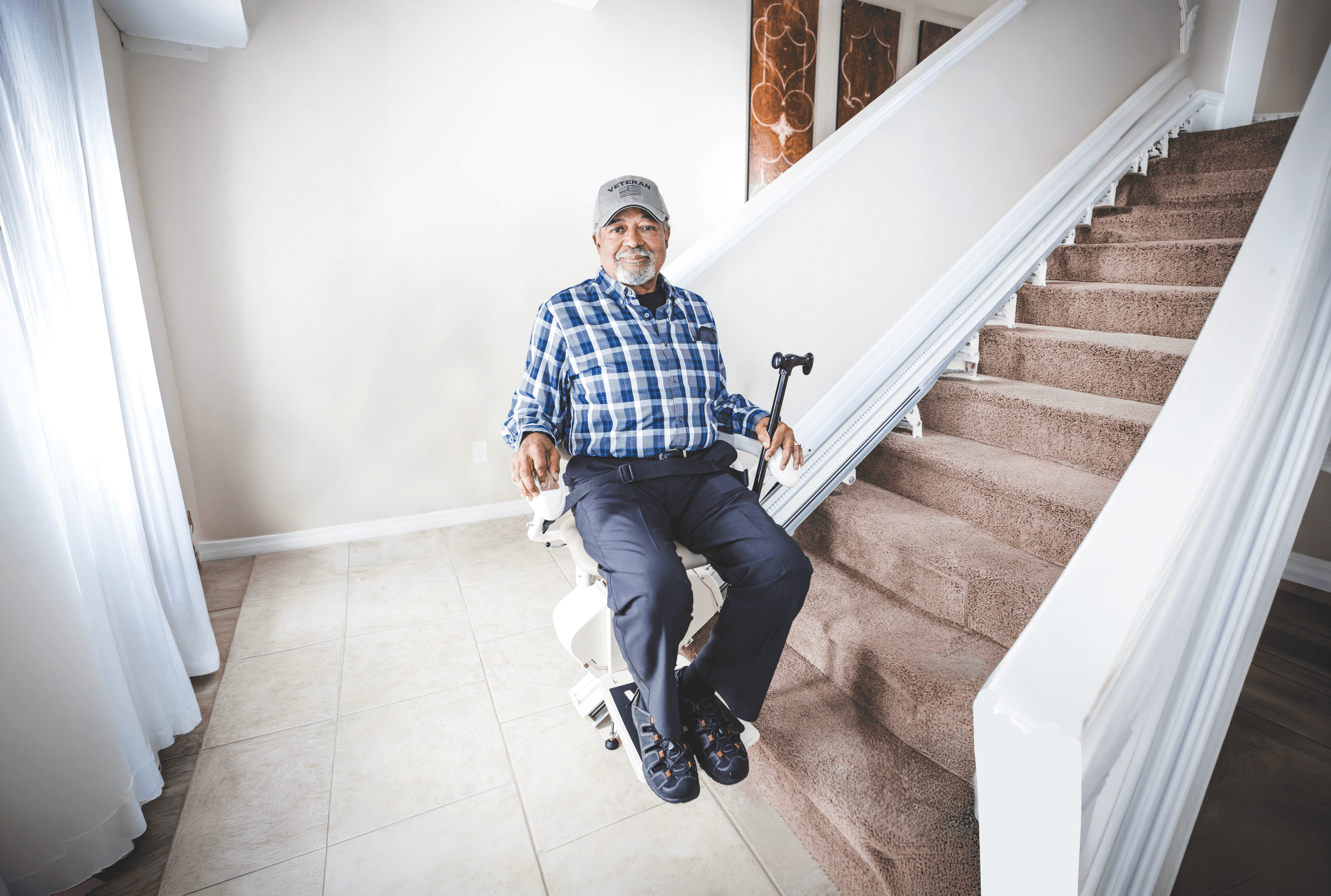
A stairlift can provide another way to move between floors without requiring someone to repeatedly climb the stairs.
2. Someone Has Started Avoiding the Upstairs or Downstairs
Pay attention to changes in routine.
Someone who once regularly used every part of their home may begin avoiding the second floor because getting there has become difficult. They may stop using an upstairs bedroom, avoid bringing laundry downstairs, or limit trips between floors.
These changes can be easy to dismiss as simply "getting older," but they can also indicate that the home is no longer meeting the person's changing mobility needs.
Aging in place is closely connected to maintaining autonomy, familiarity, and a sense of connection to one's home and community. In interviews with older adults, Wiles et al. (2012) found that aging in place was associated with feelings of security and familiarity, as well as independence, autonomy, and connection to important relationships.
Making a home more accessible can allow someone to continue using the spaces that are important to them rather than gradually giving them up.
3. There Has Been a Fall, Near Fall, or Increasing Fear of Falling
A fall can be an important warning sign—but it isn't necessary to wait for one to happen before addressing a potentially hazardous environment.
Research consistently identifies falls as an important concern for older adults living at home. A systematic review and meta-analysis of randomized studies found that appropriately designed home-modification interventions were associated with a reduction in falls among older adults (Lee et al., 2023).
More recent research has likewise found that home hazard assessment and environmental modifications can reduce fall incidence and medically attended falls (Crosby et al., 2026).
The stairs deserve particular attention because they require balance, coordination, strength, and the ability to safely transfer weight from one step to another.
If someone has experienced a fall on the stairs, nearly fallen, or has become increasingly afraid of using them, it may be worth having the home's accessibility evaluated and discussing possible solutions with an appropriate professional.
4. Family Members Are Increasingly Worried About Safety
Sometimes the person using the stairs isn't the first person to recognize that something has changed.
Adult children, spouses, and other caregivers may notice that a loved one is holding onto the railing more tightly, taking the stairs one step at a time, avoiding carrying anything, or needing someone nearby for support.
These concerns shouldn't automatically mean that someone needs to move out of their home. In fact, home modifications are specifically used as one strategy for supporting aging in place.
A 2025 systematic review examining 20 studies found that home modifications were associated with improvements in areas including fall prevention, functional independence, quality of life, and—in some studies—caregiving burden (Cha, 2025).
A stairlift can be one potential accessibility solution when stairs have become a concern, allowing families to address a specific barrier while preserving the rest of the home.
5. You're Planning for the Future—Not Just Responding to a Crisis
Perhaps the best time to consider a stairlift is before the stairs become an emergency.
A home that works perfectly today may not work as well several years from now. Planning ahead gives families time to consider different options, understand what modifications may be appropriate, and make decisions without the pressure of an immediate crisis.
Research on aging in place emphasizes that successful aging at home involves adapting the environment as an individual's needs change. Home modifications can be part of a broader strategy for maintaining independence and remaining in a familiar environment (Cha, 2025; Sheth & Cogle, 2023).
For some households, a stairlift may be an appropriate solution. For others, different modifications—or a combination of modifications—may make more sense.
The important thing is to address accessibility before a preventable problem forces the decision.
Staying in the Home You Love
Aging in place isn't about refusing to change. It's about making thoughtful changes that allow a home to continue working as life changes.
If the stairs are becoming difficult, being avoided, creating anxiety, or becoming a concern for family members, it may be time to explore your options.
A stairlift isn't necessarily the right solution for every home or every individual. But when stairs have become a significant barrier to getting around the home, it can be one option worth discussing.
The goal isn't simply to make stairs easier. It's to help make the home more accessible, comfortable, and usable for the people who live there.
References
Cha, S.-M. (2025). A systematic review of home modifications for aging in place in older adults. Healthcare, 13(7), 752. https://doi.org/10.3390/healthcare13070752
Crosby, K. M., Rodriguez, C. A., Canas, M. A., Noroozi, S., Vis-Dunbar, M., Sakakibara, B. M., & Jakobi, J. M. (2026). The influence of home modifications on falls in community-dwelling older adults: A systematic review. Assistive Technology, 38(2), 176–186. https://doi.org/10.1080/10400435.2025.2596022
Lee, J., et al. (2023). Home hazard modification programs for reducing falls in older adults: A systematic review and meta-analysis. BMC Geriatrics, 23, Article 436. https://doi.org/10.1186/s12877-023-04126-3
Sheth, S., & Cogle, C. R. (2023). Home modifications for older adults: A systematic review. Journal of Applied Gerontology, 42(5), 1151–1164. https://doi.org/10.1177/07334648231151669
Wiles, J. L., Leibing, A., Guberman, N., Reeve, J., & Allen, R. E. S. (2012). The meaning of “aging in place” to older people. The Gerontologist, 52(3), 357–366. https://doi.org/10.1093/geront/gnr098